


Title: The Merle Bernedoodle Puppy: A Friendly Guide to This Eye-Catching Hybrid
Introduction
The Merle Bernedoodle puppy is a charming crossbreed that has quickly won hearts around the world. By blending the steady Bernese Mountain Dog with the clever, low-shedding Poodle, breeders have created a companion that fits well into many homes. This guide walks you through the breed’s background, personality, daily needs, and health tips.
History and Origin
Intentional crossings of Bernese Mountain Dogs and Poodles began a few decades ago, and the merle pattern was later added to produce the striking coat seen today. The goal was simple: combine the Poodle’s quick mind and allergy-friendly coat with the calm devotion of the Bernese.
Temperament
These puppies are typically affectionate, bright, and eager to join family life. They bond strongly with their people, enjoy learning tricks, and usually get along with children and other pets when raised together. Early guidance helps them grow into polite, confident adults.
Physical Characteristics
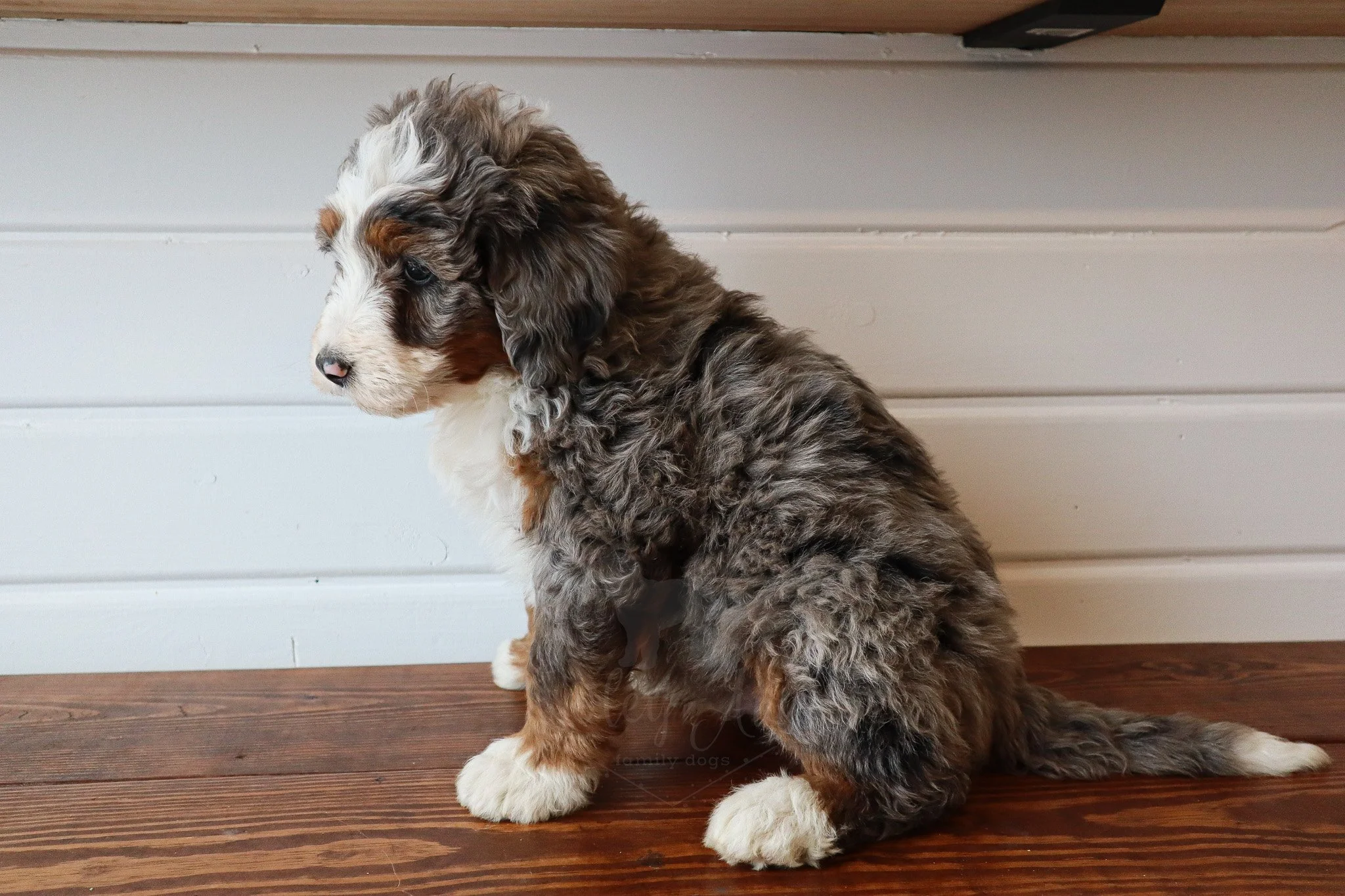
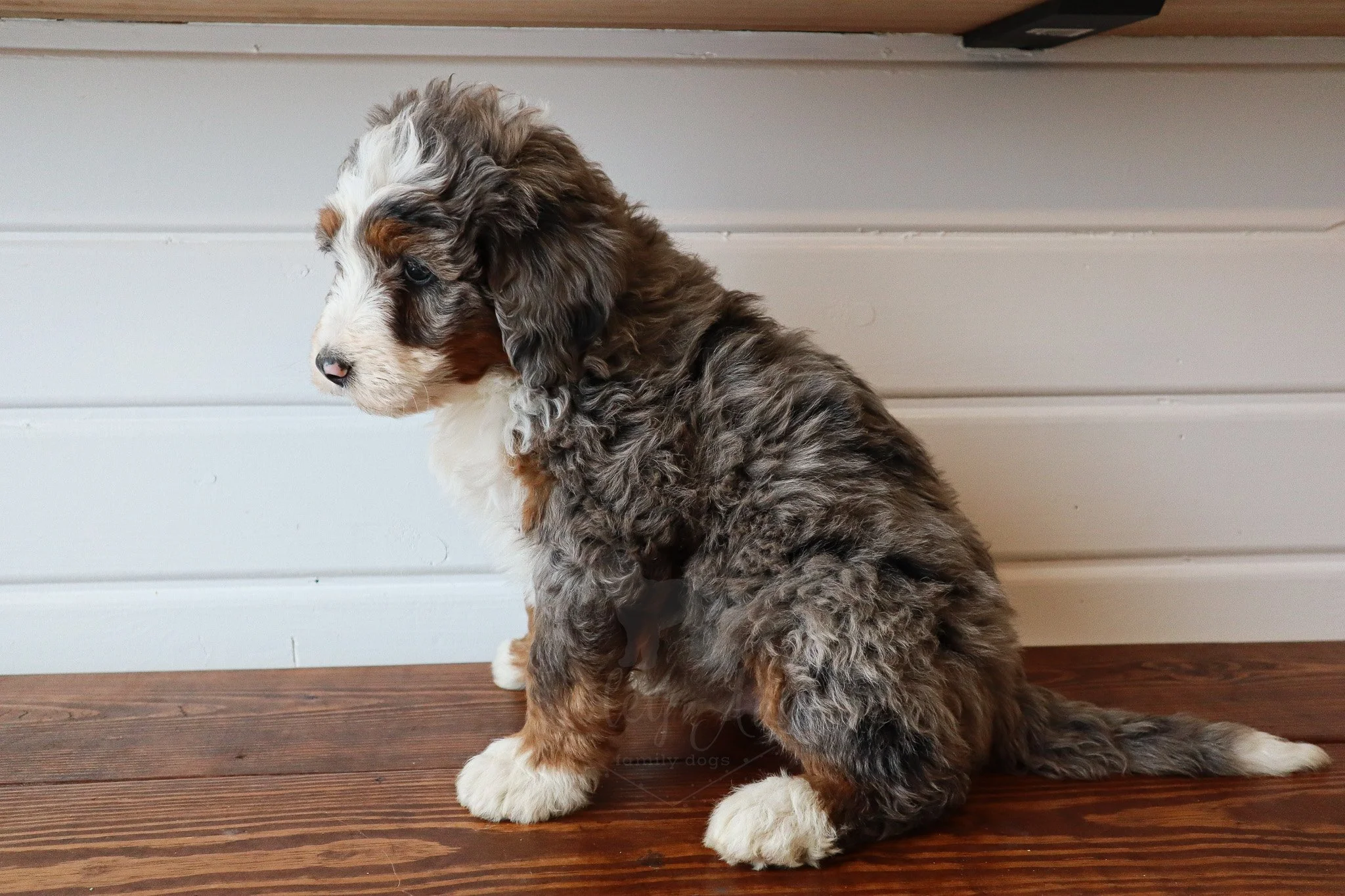
Merle Bernedoodles often inherit the Poodle’s curly or wavy, low-shedding coat, which can display patches of lighter and darker color against a solid base. Adults range from medium to large size, with most standing about knee-high and weighing anywhere from a sturdy fifty pounds to a robust ninety.
Care Requirements
A thorough brush two or three times a week keeps the coat free of mats and reduces stray hair. Daily walks, interactive games, and puzzle toys satisfy both their energy and their intellect. Feed a high-quality diet matched to age and activity level, and monitor treats to maintain a healthy weight.
Fresh water, a secure yard, and a cozy indoor spot round out the basics. Routine dental care and nail trims should also be part of the schedule.
Health Considerations
Like any breed, Merle Bernedoodles can face joint issues, eye conditions, or skin sensitivities. Choosing a responsible breeder who screens parent dogs lowers many risks. Regular vet visits, keeping your dog at an ideal weight, and providing joint-friendly exercise help support long-term wellness.
Training and Socialization
Short, upbeat training sessions work best. Reward desired behaviors with praise, toys, or treats, and stay consistent with house rules. Introduce your puppy to new sights, sounds, people, and friendly dogs during the first few months to build confidence and prevent shyness.
Continue reinforcing good manners into adulthood; these smart dogs enjoy learning new skills and can excel in obedience, agility, or therapy work.
Conclusion
With their eye-catching coats, steady temperaments, and quick minds, Merle Bernedoodles make lively, loving companions for active households willing to invest time in grooming, training, and play. Meeting their physical and emotional needs results in a loyal friend for years to come.
Whether you live in a suburban home with a backyard or a city apartment near a park, this adaptable hybrid can thrive when given proper care, consistent guidance, and plenty of affection.
Recommendations and Future Research
Breeders are encouraged to continue health testing and to pair dogs for genetic diversity rather than color alone. Owners can support the breed’s future by sharing honest feedback on temperament and health with their breeder and veterinarian.
Ongoing studies into coat genetics, exercise needs, and longevity will help refine best practices, ensuring that each new litter of Merle Bernedoodles grows up happy, healthy, and well-prepared for life as a beloved family member.


