

Title: Exploring the Significance of Relative Permittivity in Electromagnetic Wave Propagation
Introduction:
Relative permittivity, often called the dielectric constant, is a key parameter in understanding how electromagnetic waves travel through different substances. It gauges how easily a material can become polarized when exposed to an electric field. This article explores why this property matters, how it shapes wave behavior, and where it proves useful in everyday technology. By reviewing its basic characteristics, we can better grasp the rules that govern wireless signals, medical imaging, and many other applications.
Understanding Relative Permittivity
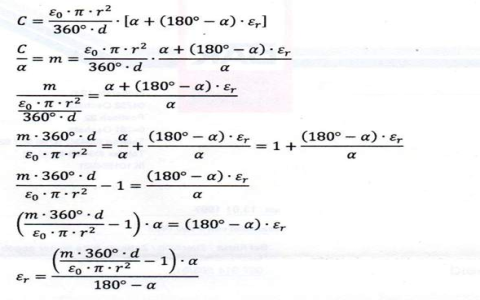
Relative permittivity is a unit-less ratio comparing a material’s ability to store electric energy with that of free space. A higher value means the material polarizes more readily, slowing and bending passing waves to a greater extent. Everyday insulators such as glass or most plastics fall toward the lower end of the scale, whereas specialized ceramics or certain liquids sit at the higher end.
The exact figure depends on composition, temperature, and frequency, so engineers routinely consult measured tables before choosing components for high-frequency circuits or antennas.

Impact on Wave Travel
When an electromagnetic wave enters a medium with noticeable permittivity, three main effects appear:
1. Attenuation: Some energy is converted to heat, weakening the signal as it moves deeper into the material. Greater permittivity usually increases this loss.
2. Phase Velocity: The wave slows by a factor equal to the square root of the relative permittivity. This reduced speed must be accounted for when timing signals in radar or satellite links.
3. Refraction: At the boundary between two substances, the change in velocity causes the wave path to bend. Designers exploit this bending to steer beams in lenses, radomes, and planar antennas.
Practical Applications
Relative permittivity influences a wide range of technologies:
1. Wireless Hardware: Selecting substrates with suitable values allows compact antennas, stable filters, and efficient transmission lines for phones, Wi-Fi routers, and IoT devices.

2. Medical Imaging: Differences in tissue permittivity help form the contrast seen in certain scanning methods, assisting clinicians in identifying abnormalities.
3. Microwave Systems: From oven cavities to radar housings, controlled permittivity ensures uniform heating or reliable echo return, improving safety and accuracy.
Research and Future Directions
Scientists continue to refine measurement techniques and explore new frontiers:
1. Precision Characterization: Advanced sensors and algorithms aim to deliver faster, more accurate permittivity data across broad frequency ranges, accelerating material discovery.
2. Engineered Metamaterials: By structuring matter on sub-wavelength scales, researchers create composites with tailor-made electric responses, opening doors to thinner lenses, cloaking devices, and smarter surfaces.
3. Nonlinear Behavior: Investigations into how intense fields alter permittivity could improve high-power microwave systems and future optical computers.

Conclusion:
Relative permittivity remains central to the design of any system that relies on electromagnetic waves. Its influence on signal speed, loss, and direction underpins modern communications, healthcare, and sensing technologies. Continued study of accurate measurement methods, artificial materials, and nonlinear phenomena promises even more efficient and versatile devices in the years ahead.


